Blaise Pascal: The Story of the Man Who Invented Roulette
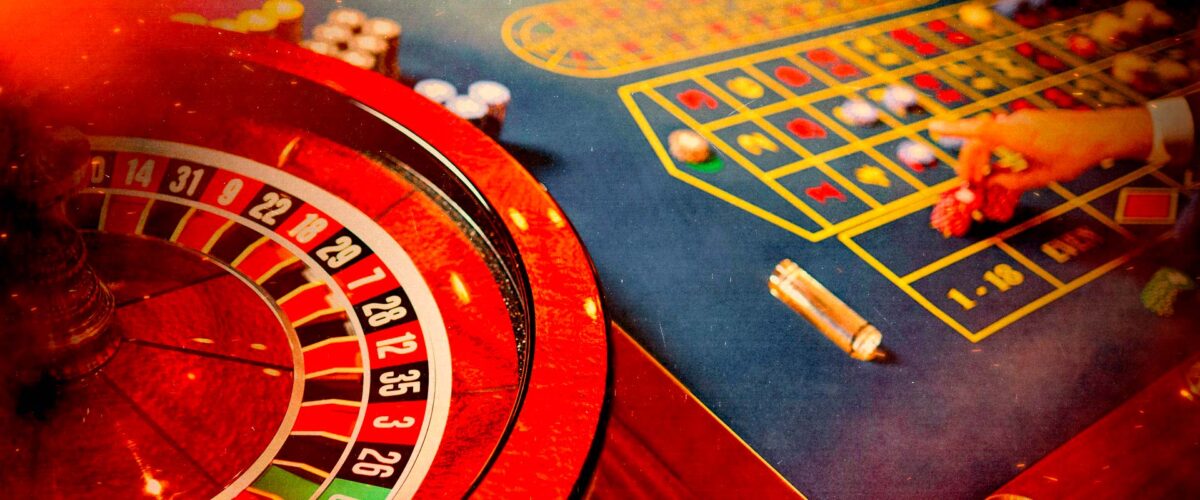
Roulette is one of the most famous casino games today. The creation of this table game is accredited to Blaise Pascal. Blaise is a renowned mathematician, physicist, and philosopher. Many historians believe Pascal developed the primitive form of the roulette wheel in 1655 as a by-product of his quest for perpetual motion. Let’s look at the brain behind the “Little Wheel”!
The Accidental Invention of Roulette
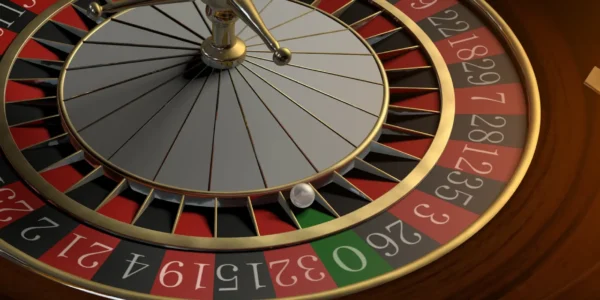
In the 1650s, Blaise Pascal wanted to create a machine that could run indefinitely without any external energy source. He made a wheel and hoped to bring his idea of a perpetual motion machine to life. Pascal designed the wheel with edged pockets by placing a small ball by the edge to defy the laws of physics.
However, it didn’t turn out as planned. Each time the ball travelled around the wheel, it landed in one of the pockets. So despite his attempts, this innovation failed. Although he didn’t get to achieve his goal, there was a positive to this; he accidentally created the prototype of a roulette wheel.
The Early Years
To understand the man behind one of the iconic online casino games, it’s important to start at the beginning. Here, we will aim to shine a light on the inspirational figure 403 years after his birth.
Blaise Pascal was born on June 19, 1623, in Clermont-Ferrand, France, into a well-respected family. Unfortunately, his mother, Antoinette Begon, passed away when he was just three years old. Therefore, the parental burden fell to his father, Étienne Pascal, who was a magistrate and an accomplished mathematician, which is how Blaise inadvertently set off on his way to inventing roulette.
Spotting his son’s intelligence, Étienne opted to manage his son’s education, and, for Blaise’s father, this meant forbidding his son from studying his major passion: mathematics – a bit hypocritical considering the field his father worked in!
Despite his dad’s best efforts, by the time Pascal was a teenager, he was fully immersed into the world of numbers, and the eventual inventor of roulette was making contributions to mathematics.
The Evolution of Roulette
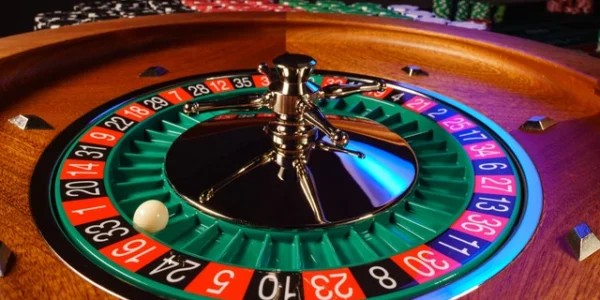
Roulette became a popular game in the 18th century. Since the creation of the prototype, the game has evolved in terms of looks and rules. The game’s popularity spread across Europe mainly because of the French. Soon, other versions showed up. Today, the two main variations are European and American.
It’s nearly impossible to visit a physical or online casino and not find a roulette table. Online casinos have made access to the game easier. Due to the fact that they are not restrained to a physical space, they can offer multiple roulette variants. The most common is the live casino version, which mirrors the experience at a physical establishment.
Versions of Roulette
Here’s a look at the common variants of online roulette you can expect at a physical or virtual table;
European Roulette: 36 numbered pockets that are either red or black. One green pocket for zero. Better odds and lower edge.
American Roulette: 38 pockets, black and red, numbered 1 to 36. Two extra green pockets for a single 0 (0) and a double 0 (00). High house edge.
French Roulette: Original version of the game, similar to European Roulette. Includes “La Partage” and “En Prison” rules.
Mini Roulette: A scaled-down version of the traditional game. Features 13 pockets with a single zero.
Pascal’s Contributions to Mathematics and Science
Pascal’s real breakthrough came between 1642 and 1644 when he invented the Pascaline, or what many consider to be the first calculator. The desire to invent a revolutionary item came from Blaise’s desire to aid his father with tax calculations (it really is true: nothing is certain in this world apart from death and taxes).
The Pascaline wouldn’t be identifiable as a calculator next to our modern-day versions – more akin to an old-school radio – but it laid the groundwork for the ones we use today, even if it performed addition and subtraction via gears and dials.
In the years that followed he invested time improving his creation, developing over 50 different prototypes for the device.
The Pascaline calculator became something of a status symbol in France, meaning that those who owned one were automatically considered to be members of high-class society. His other major accomplishments include ‘Pascal’s Principle of Pressure’ and the modern theory of probabilities known as ‘Pascal’s Rule’.
In addition to inventions and mathematical theories, Pascal is also known for his prose which employed wit and satire to captivate readers.
A Time for a Change
Pascal’s intellectual and revolutionary journey didn’t end as many would’ve anticipated, with the Frenchman turning to religion.
But, naturally, despite the newfound interest in God so late in his life, Blaise Pascal still managed to leave his mark on the area; a mark that remains present to this very day.
Pascal wrote Pensées – which translates to Thoughts – which is still used in the 21st century by avid Christian believers to prove the existence of their God. Despite being unfinished due to his untimely passing, the pages Pascal put together set about defending those who choose to worship God.
Blaise’s basis for his beliefs were that those who rejected the idea of God were simply doing so out of humans’ inability to process such an idea.

Pascal’s Wager, as those pages were titled, remains the biggest page turner from within the ramblings of Pensées, which posits simply: why wouldn’t you believe in God? Because ultimately, it just means the following:
- If God is real, and someone believes that, then everyone’s a winner; bring on heaven.
- If God isn’t real but a person spends a lifetime believing God is real then they’ve had a life full of purpose, support and internal happiness. The realisation of God not existing is minimal at the very end in contrast to the time lived in belief.
- If God is real but a person has spent a lifetime believing otherwise then eternity in hell awaits.
- If God does not exist and one does not believe, the gain from this is minor.
Final Thoughts on Blaise Pascal
Genius Blaise Pascal invented one of the world’s most popular casino games by accident. Apart from the roulette, he was an embodiment of knowledge. Pascal’s work is still relevant to date and has helped the human race in several aspects. As a lover of roulette, his life is worth studying!

Top Content



Trending